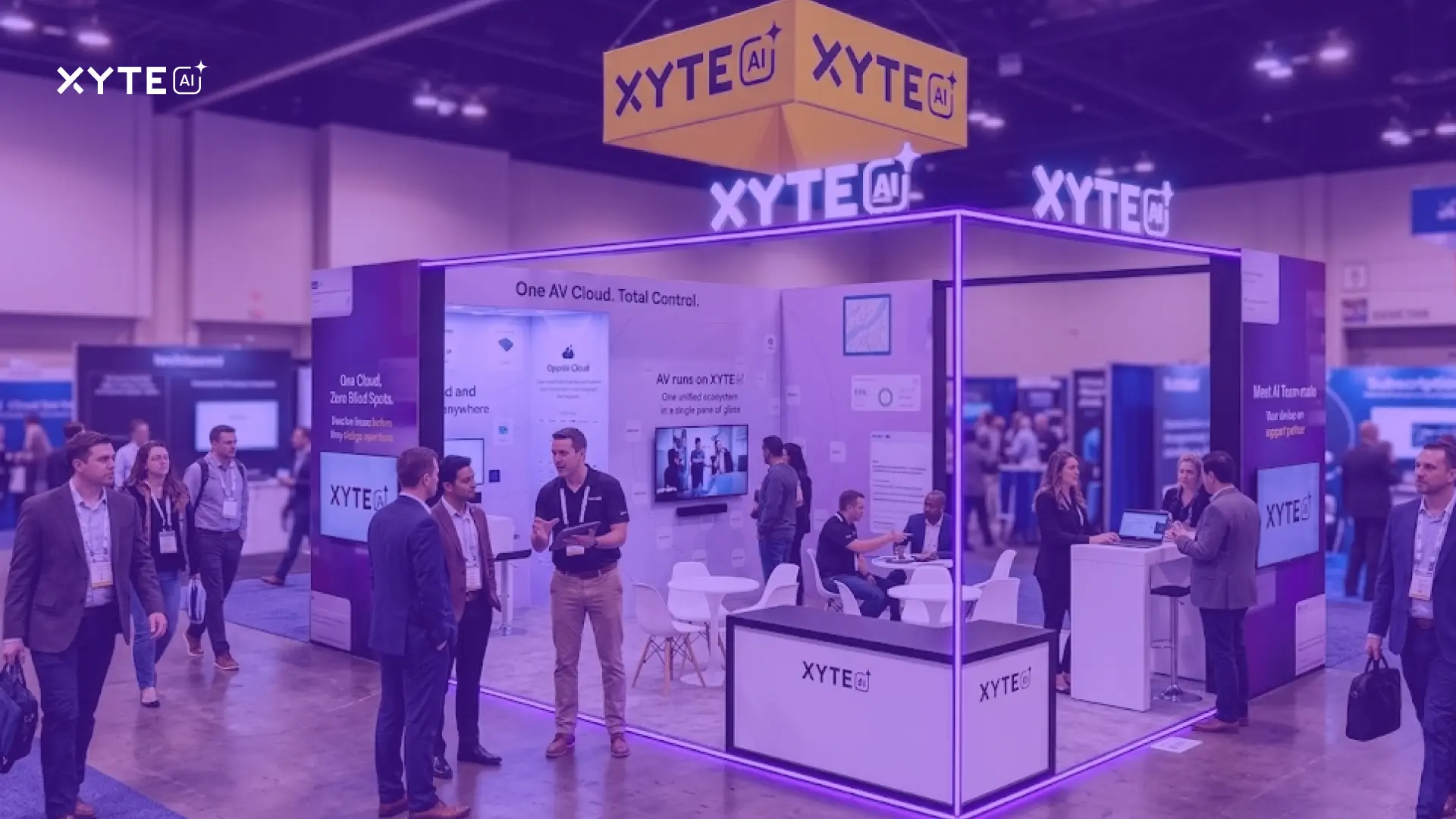
This will be my sixth InfoComm. The show alternates between Las Vegas and Orlando, but I've always preferred the Vegas years. The heat outside keeps everyone on the show floor longer, which means not only a steady stream of people through the booth, but also lots of time for those informal - and invaluable - side conversations. Because it’s these chats with integrators, IT leads, MSPs, and enterprise teams that really give you a sense of the pulse of this industry. When the same concerns keep coming up from different people in different roles - this tells you what the market actually cares about right now.
With InfoComm 2026 starting next week, here are five questions I expect to hear on the show floor in Las Vegas:
Question #1: "What exactly does your AI do?"
Two or three years ago, the AI conversation at InfoComm sounded the same everywhere. Every vendor on the floor had the same message: we have AI, we have AI. That phase is over. The people walking the floor are going to be asking what exactly you're delivering with AI, not whether you have it.
And there are good answers now. One manufacturer may have AI-powered tools that help you auto-design room space using data from the room’s camera feed and others may offer room auto-tuning, where the system plays tones in the space, recognizes where the microphones and speakers are, and configures itself for optimal performance. At Xyte we're using AI to identify the root cause of device and room issues, summarize incidents with context, and help teams figure out the right fix across every environment they manage. I expect that kind of operational specificity to define the AI conversation at this year's show.
Question #2: "How fast can I get this room up and running?"
The push across the industry right now is toward what some vendors are calling autopilot - you connect everything and it starts working within five to ten minutes. That kind of setup used to take hours. Companies are investing in experiences where you pre-configure devices before deployment, or just set them up fresh on site and they work out of the box.
End customers care about this, and so do IT admins and installers, because faster setup means less time on site and more time on the next job. At Xyte, onboarding and guided deployment have been core to what we do from the start. I expect this question to come up early and often, especially from integrators managing high room counts across multiple customers.
Question #3: "How do I keep everything running with a smaller team?"
This one comes up in almost every conversation I have, and I don't expect InfoComm to be any different. Friends in the industry, customers, partners - they're all telling me the same thing. They don't have enough people to do the work. And the expertise they need, whether it's in-house or outsourced, is not cheap anymore.
The cost pressure is coming from multiple directions at once. Hardware prices are climbing, tariffs are adding new layers of expense, and smaller manufacturers - anyone under the $100 million mark - feel it the most. That reality makes everything else more urgent. Teams need systems that reduce time on site, resolve issues remotely, and let a lean staff cover more rooms and more customers without scaling headcount at the same rate.
Question #4: "What happens when something goes wrong in the room?"
Customers ask me all the time what vendors actually mean when they talk about self-healing. It's a fair question, since the term is everywhere right now. Some vendors use it in practically every paragraph of their marketing.
But the reality is that there's no such thing as true self-healing in AV. What you can do is know when something is down, understand why it's down, and have a clear path to recovery. Can I reboot it and get it back? Can I power cycle it and recover it so the room isn't dead for another hour? That's the practical version of the conversation.
The bigger shift I'm seeing is the move from reactive to proactive. Customers want to know about problems before users report them, and they want guidance on what to do next. At Xyte, that's exactly how we've built our approach to remediation - surface the issue, explain the context, and let a human make the final call.
Question #5: "How do I get more than five years out of this investment?"
This is one I feel strongly about. Enterprises don't want to spec a room for three to five years anymore. They want seven to eight, and in some cases closer to ten. And honestly, they should. Ripping out existing hardware and putting in something new is a significant amount of money, and nobody wants to do it on a short cycle.
Manufacturers don't have the resources to keep designing new products every three years, either. So, the model that makes sense is to design a top-spec product, maybe charge a little more upfront, and then keep adding value over time through software - new features, new functionality, security patches - so the customer sees a return across the full life of the hardware.
Crestron, Logitech, Shure, and others have done this with their products, hardware that lasts for several years and delivering new value through ongoing updates. I think that's the direction the industry is heading, and platforms that support long-term lifecycle management - like Xyte - are going to be a big part of the conversation.
The Bottom Line
Six InfoComms in, I've learned that the questions people bring to the booth tell you more than any keynote or product launch. And the five I've laid out here share a common thread - the industry is moving toward operational maturity, where the value of a system is measured by how it performs over years, not how it looks on a spec sheet.
I'll be in Las Vegas next week, ready for the heat and a full week of those unfiltered conversations. And I'll be back afterward with a look at what I actually heard...



![Is My AV Gear Supported? [Hint: It’s Not a Yes-or-No Question]](https://cdn.prod.website-files.com/64b4f17a16222f7b816bb7a9/6ac76147cf570765858d8ad5_blog%20-%20are%20my%20devices%20supported.webp)