.webp)
When AV devices go offline, the first instinct is to blame the device. A meeting room goes dark five minutes before a board presentation - must be the display. A camera freezes mid-call - bad firmware. A microphone drops off the network - faulty hardware. The natural response is to dispatch a technician, swap the component, and close the ticket.
That instinct shapes the entire operational model. It shapes how teams are staffed, how SLAs are structured, and how integrators define the scope of their managed service agreements. Device failure is treated as the default explanation, and every downstream decision follows from it.
New data from Xyte shows that this default explanation may be wrong most of the time. As reported in Xyte's Midyear 2026 AV Cloud Data Report, in a recent sample of thousands of offline incidents, only about a third looked like isolated device failures. The rest appeared in shared-dependency patterns associated with room-level events, edge paths, connector clouds, or broader infrastructure issues. In many cases, the device was the symptom and the likely cause was upstream.
In this post, we'll walk through what the report data shows, why device misdiagnoses are so persistent, and what changes when teams can see the context of every fault.
The Evidence
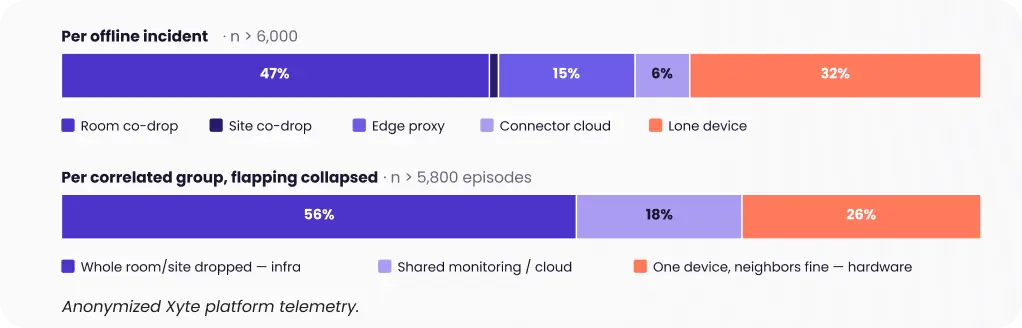
Xyte's report analyzed over 6,000 offline incidents across anonymized Connect+ platform data. Forty-seven percent appeared as room-level co-drops (every device in a room going offline at once), 15% were associated with an edge proxy path (the on-premises gateway connecting devices to the cloud), 6% with a connector-cloud path (the vendor's own cloud service going down), and a small additional share showed broader site-level patterns. Only 32% looked like an isolated device failure - one device down with all surrounding devices still online.
In the graph below, the same data set appears in two views. The top bar shows the pattern observed per offline incident. The bottom bar groups related events into correlated episodes and collapses repeated flapping, so multiple symptoms associated with the same room, site, or shared path can be understood as one broader event. In the per-incident view, 32% looked like lone-device failures. After related alerts were grouped and flapping was collapsed, only 26% of correlated episodes matched the classic hardware pattern: one device down while its neighbors remained healthy.
Why the Misdiagnosis Persists
Device-level thinking persists because the tools most teams rely on reinforce it. Most AV environments are monitored through vendor-specific portals, and each portal can only see its own equipment. When five devices from three different manufacturers go offline in the same building at the same time, each portal registers separate incidents. AV leadership lacks context - a mechanism to correlate those events across brands, rooms, or connection paths - since the data exists in multiple vendor systems.
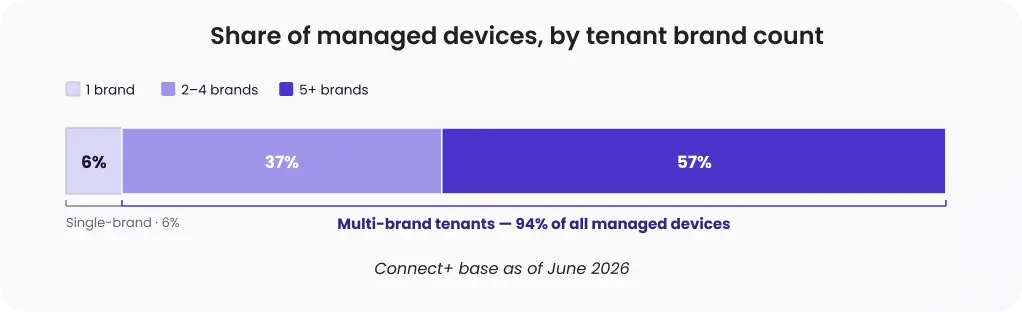
According to the report, that blind spot seems to be the norm. Across Xyte’s Connect+ base, about a quarter of tenants manage three or more brands, while 94% of all managed devices reside in environments with more than one brand. Teams triage device by device, ticket by ticket, while the root cause often remains invisible because no single system can see the full picture.
What Changes When Context Replaces Assumption
When offline events are correlated by location, connection path, and device dependency, triage looks completely different. Instead of a flood of individual alerts, teams see one incident with a defined scope - the affected room or site, the devices involved, and the likely cause. On Xyte's platform, teams using notification controls see a median 74% reduction in alert noise. That reduction comes from grouping related symptoms that appear to share the same underlying incident into a single view.
In the graph below, for example, two sets of devices connected through different on-premises gateways both went offline over a three-hour window. One set held many devices offline and then recovered all at once, a pattern that pointed to a clean outage behind a shared connection. The other fluctuated for hours, pointing to degradation along an unreliable path. Yet teams saw the same symptom: a device outage. And without context, that's all they would have seen - two identical-looking failures requiring two identical responses. Context showed which problem the team was actually facing and let them solve the right one for each instance.
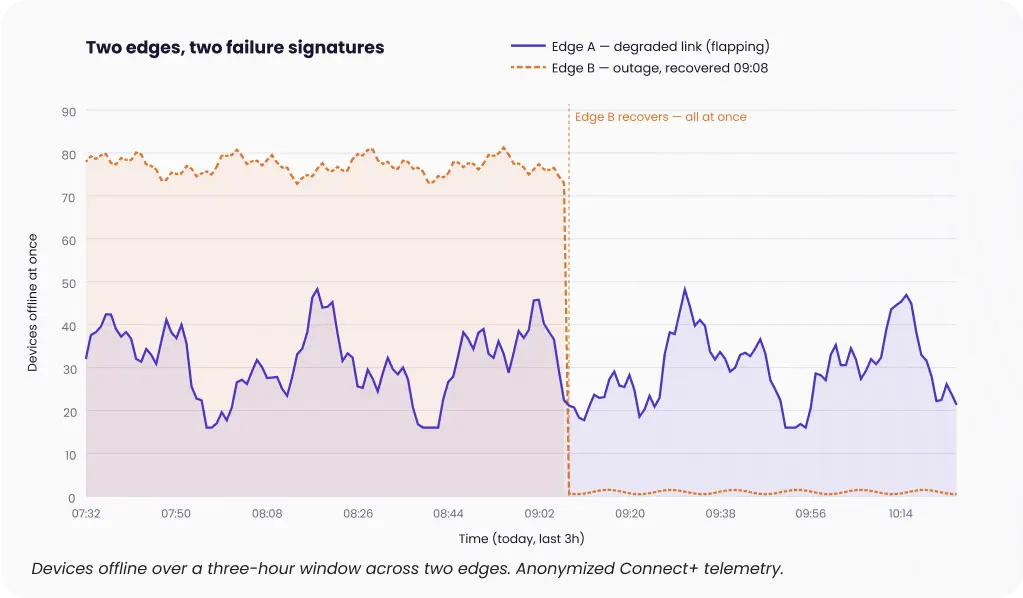
This is the power of context - and it fundamentally changes incident response. The raw alert only says a device is offline. Context says whether the cause is the device, the room, the site, or the connection path - and whether the team needs to replace a component, restore a connection, or stabilize an unreliable one.
The Implication
If most offline incidents appear to involve shared dependencies, as the report’s analysis indicates, then defaulting to a device-centric response carries an unnecessarily high price tag. Without context, device-centric response leads to truck rolls to rooms where the device was never the problem, resolution timers that start from the wrong diagnosis, and recurring outages because no one found the actual cause.
One key takeaway from this year’s report is that the secret weapon against misdiagnosis is context - knowing which dependency failed, how far the failure spread, and what kind of problem your team is actually dealing with. And how do you mine and then harness that context? This is where Xyte comes in. By normalizing data across vendors, rooms, sites, and connection paths, Xyte gives teams the visibility to distinguish a device failure from a shared dependency - so they can act on the right diagnosis the first time.
See what this looks like across more than 6,000 real incidents. Download the Midyear 2026 AV Cloud Data Report.


![Is My AV Gear Supported? [Hint: It’s Not a Yes-or-No Question]](https://cdn.prod.website-files.com/64b4f17a16222f7b816bb7a9/6ac76147cf570765858d8ad5_blog%20-%20are%20my%20devices%20supported.webp)