AV and IT increasingly operate as a single, integrated function. And this is allowing AV operators and integrators to treat their AV environment as a managed, data-generating system. Last week, I sat down with Gus Marcondes, Head of NETGEAR Academy at NETGEAR AV, to talk through what this means.
For example, what happens to an AV business when every display, codec, and switch is actually an endpoint on the network? How does an integrator turn that converged infrastructure into revenue that recurs far beyond the install date?
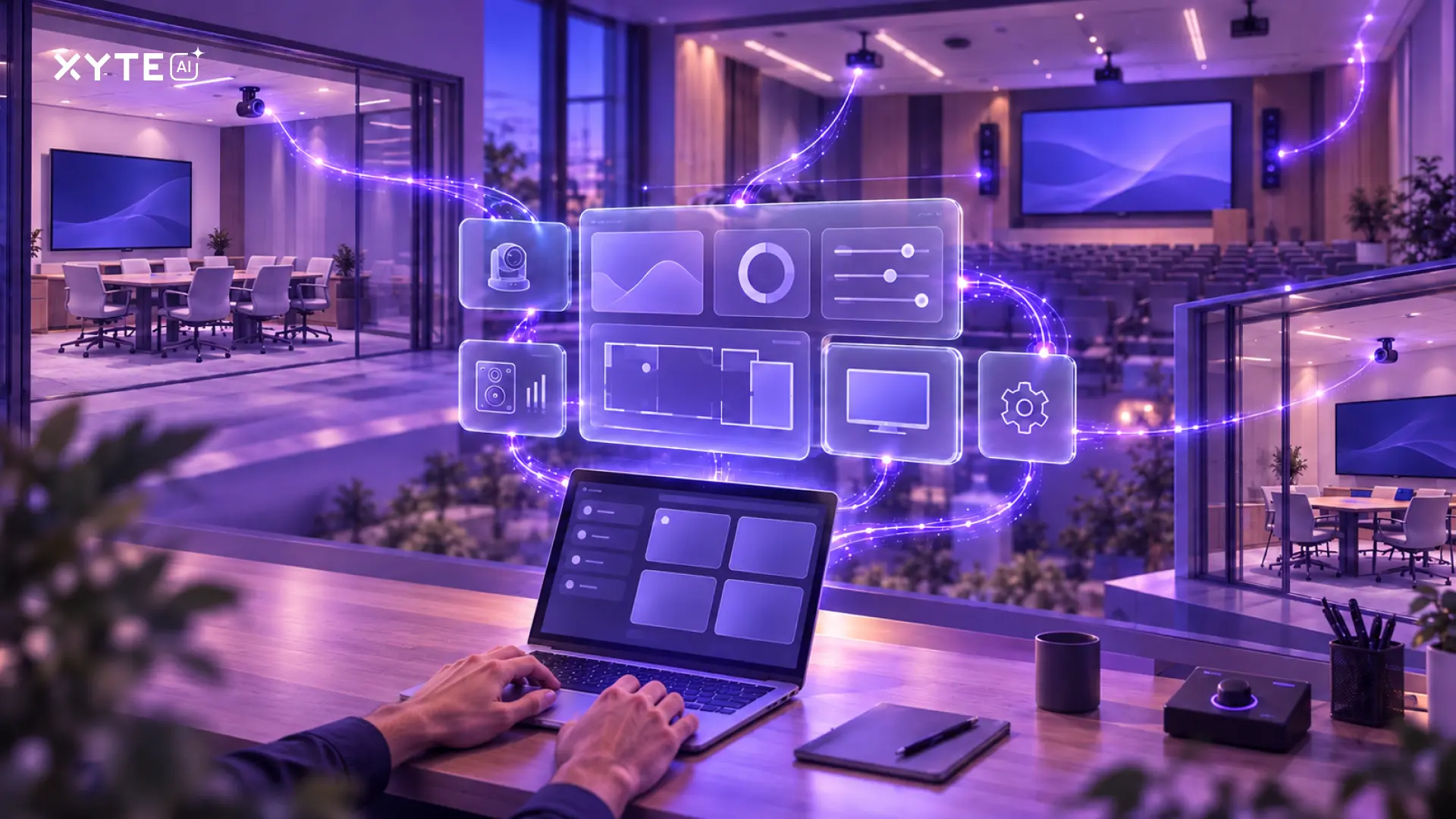
In this blog, I’ll walk through how cloud-controllable infrastructure creates a foundation for better visibility, where the intelligence layer fits in, and how integrators can build recurring service revenue on top of systems that are already in the field.
AV Is Now an IT Problem (and an Opportunity)
Gus and I agreed: we've been talking about AV and IT convergence for years, and it's finally here. AV devices now share a network with the rest of the IT environment - they speak the same protocols and depend on the same infrastructure.
The problem is that the people managing them do not yet share the same tools. As Gus put it, "A sound guy may know how to stream audio via multicast, but he doesn't know how to generate reports about that sound desk." Without a shared management layer, IT/AV teams get stuck in reactive mode - they fix what breaks only after a user complains.
For an integrator, that reactive model is a revenue ceiling. Every truck roll eats into margins, and the break-fix cycle leaves a revenue gap when there are no ‘breaks’. Luckily, having AV on IT's turf also produces a steady stream of operational data - and that data can be the foundation for a very different service offering.
The Infrastructure Layer Is Becoming the Control Layer
Turning AV data into revenue starts with infrastructure but not because every customer wants to talk about switches, VLANs, or protocols. It matters because the network is where visibility begins.
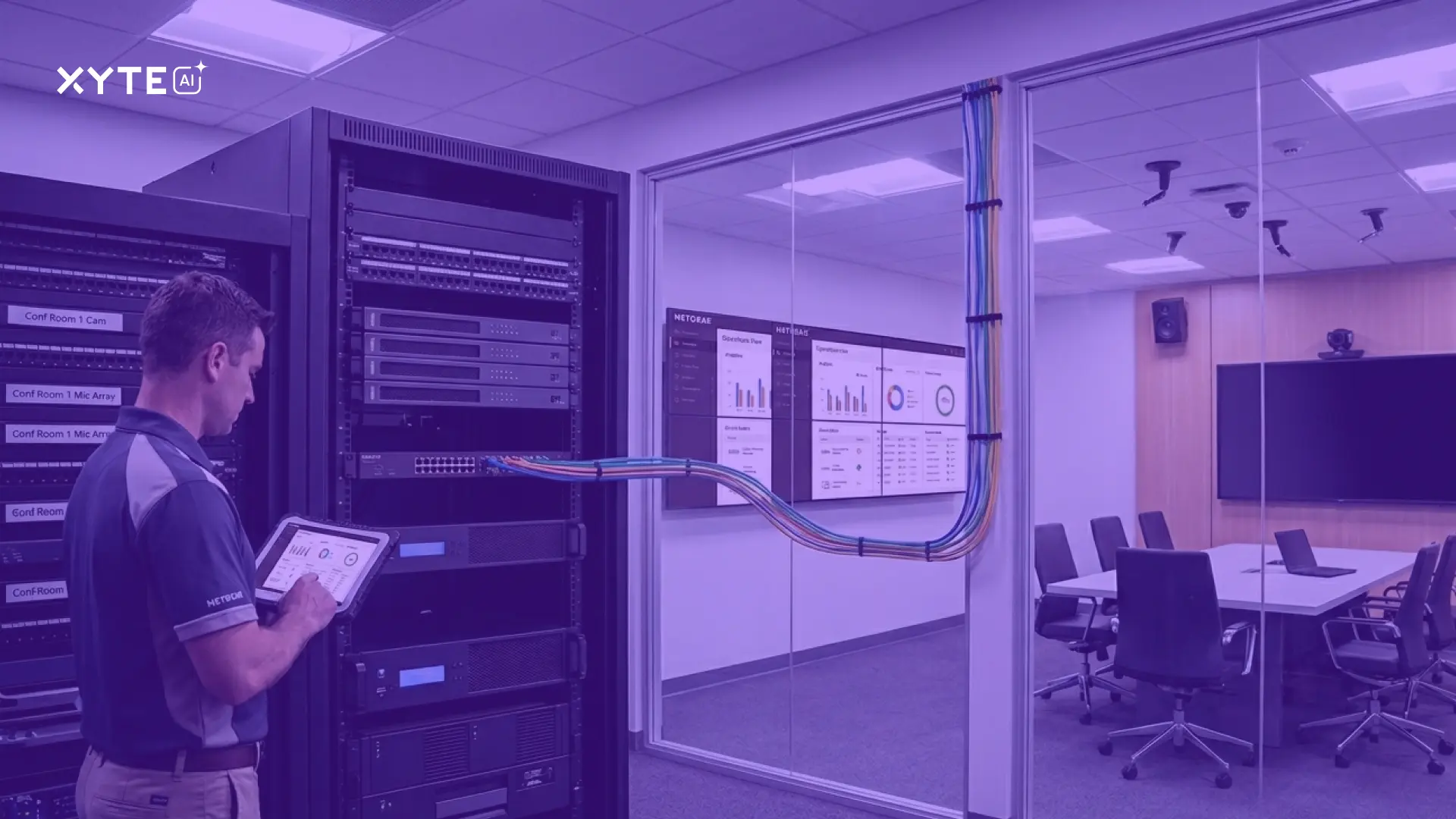
As more AV devices move onto the network, the infrastructure connecting them becomes an important source of visibility and control. Gus explained that AV devices increasingly carry power, control, and data over the same wired network, and I demonstrated how switch-level telemetry and port-level control can help teams manage endpoints that may not be cloud-native themselves.
This is also where openness matters. Initiatives like OpenAV Cloud, of which Xyte and NETGEAR are both members, are helping push the industry toward open APIs, interoperability, and less vendor lock-in, so operational data coming from AV infrastructure can be used across platforms instead of trapped inside isolated systems.
That is the real unlock: cloud-controllable, open infrastructure can give operators a path to manage systems that were never designed for cloud management.
The Management Challenge and the Intelligence Layer
Once AV infrastructure is connected, open, and capable of exposing useful data, the next question is: who manages everything running on it?
That question is becoming harder to answer. The number of connected AV devices across enterprise environments keeps growing, but the headcount in the teams responsible for them does not. Rooms now include more endpoints, more vendors, more cloud platforms, and more operational dependencies than ever before. Yet many AV and IT teams are still expected to support those environments with fragmented tools and reactive workflows.
That is where the intelligence layer fits in. The goal is not simply to add another dashboard. It is to give teams a shared operational view across rooms, sites, vendors, and device types, so they can understand what is online, what is unhealthy, what needs attention, and what can be resolved remotely.
During the webinar, Gus and I demonstrated what this can look like using a NETGEAR AV switch integrated into the Xyte platform. The example showed how infrastructure-level telemetry and control can become part of a broader management workflow, helping teams move from isolated device status to actionable system-level insight.
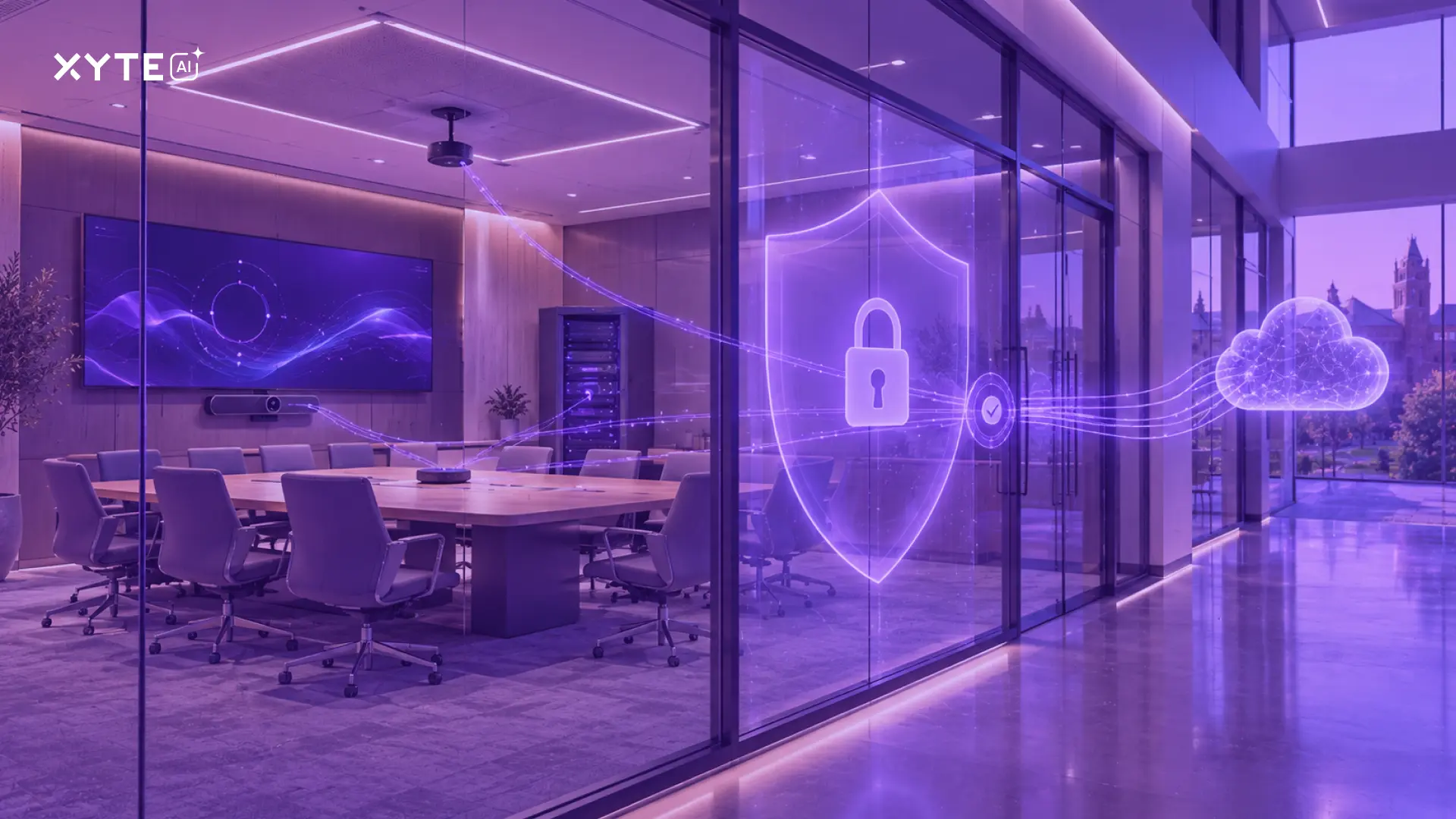
The Q&A also surfaced a critical point: cloud-managed AV has to be designed with enterprise security in mind. Data residency, access control, outbound-only communication, and compliance are no longer side topics. They are part of the buying criteria for any platform that touches the network. For Xyte, that means SOC 2 Type 2 certification, AWS hosting, GDPR-aligned European data residency, and an outbound-only communication model.
AI-Ready Operations
We moved on and discussed the line between AI and rebranded automation. Agentic AI uses all that device data to identify patterns across an entire fleet, surface issues before they escalate, explain probable causes, and recommend a corrective action for a human to approve. As Gus put it, "AI can filter real information - not slop - and help you interpret it very quickly, much quicker than any operator could on their own." That guided remediation model (detect, diagnose, recommend, approve, act) is what separates operational AI from a chatbot bolted onto a dashboard.
At InfoComm, we'll be previewing Xyte CLI, which opens this up even further. CLI introduces agent-to-agent communication at the device level, so integrators can build custom health checks and automated remediation workflows tailored to each environment.
From Monitoring to Managed Services
With the technical stack in place, Gus and I turned to the commercial question: what does an integrator do with all of this?
Most still operate on a project-based model - design and install the system, then move on to the next job. The managed service contract, if there is one, is usually a commitment to show up in 48 hours when something breaks. Real-time infrastructure data changes that. When an integrator can see device health, uptime, energy use, and support activity across every site, those data points become the basis for a true tiered service offering.
The tiers scale from monitoring into proactive management, guided remediation, and full AV-as-a-Service. The great thing is, most integrators already have the infrastructure in the field and the customer relationship to build on. A platform that can surface operational data and recommend next steps can turn that installed base into recurring revenue.
What Comes Next
Gus and I agreed that integrators who treat their AV infrastructure as a managed, data-generating system are already building the next version of their business. With open infrastructure and an intelligence layer that turns device data into guided action - every system that’s already in the field is revenue waiting to recur.
Watch the webinar recording to hear the full conversation with Gus and see the live demo.



![Is My AV Gear Supported? [Hint: It’s Not a Yes-or-No Question]](https://cdn.prod.website-files.com/64b4f17a16222f7b816bb7a9/6ac76147cf570765858d8ad5_blog%20-%20are%20my%20devices%20supported.webp)