If there was a single thread running through this year's AV Cloud Summit, it was this: what will it take to get enterprise teams to listen to their AV systems again? Because right now, many of them aren't. As Michael Goldman, Principal at Communications Design Associates, said during the panel: "People actually turn off the alerts. A lot of companies will just say, hey, we're not even listening to this anymore." I hear some version of this every week in conversations with enterprise AV and IT leaders. Their monitoring stack keeps expanding (which is a good thing), yet so does the noise.
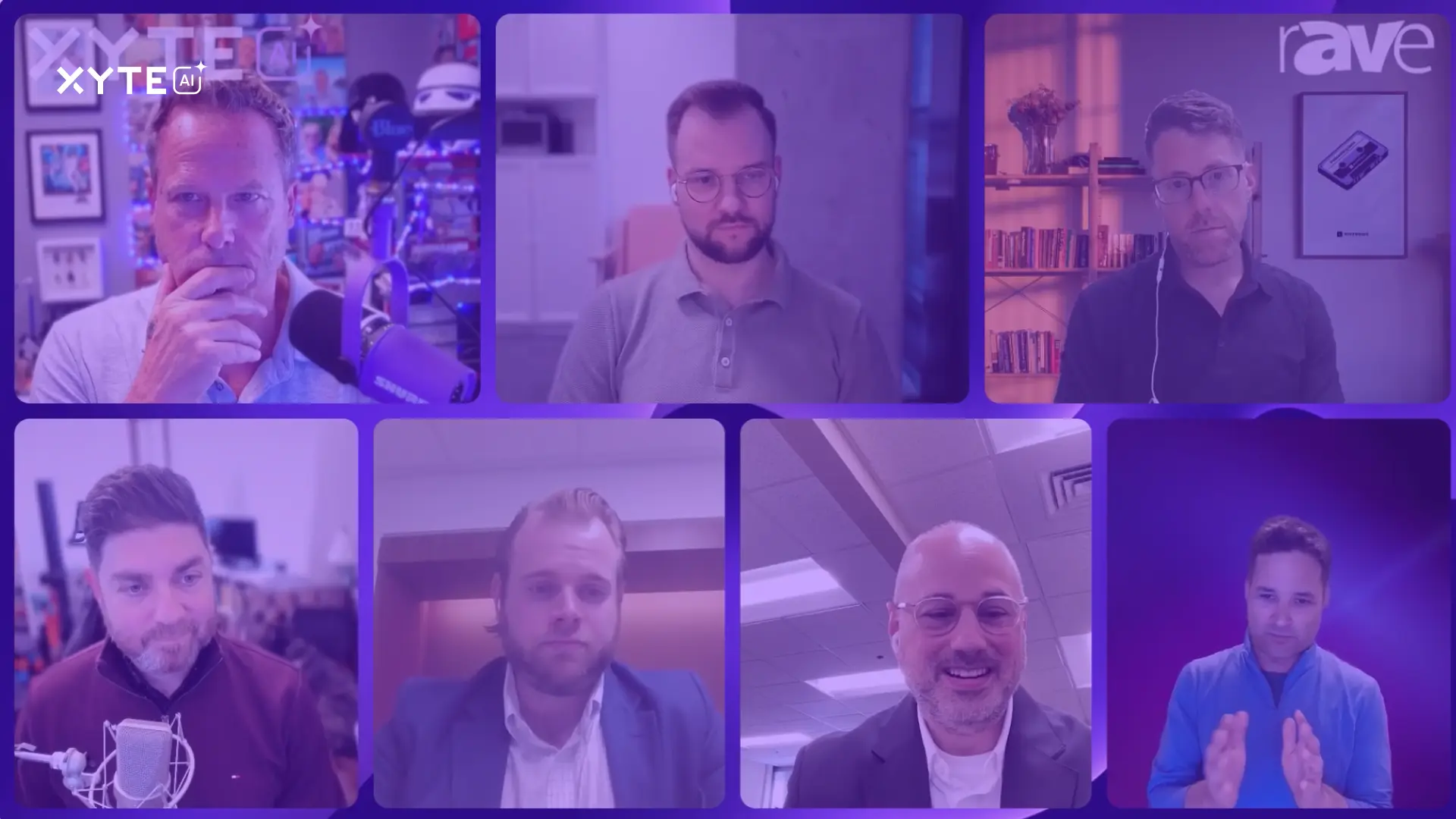
This spring's panel brought together Rado Soroka, Principal Collaboration Engineer at Snowflake; Kevin Little, Senior AV Engineer at SoFi; Alessandro Miglio, Product Owner, Meeting Rooms at Boston Consulting Group; Justin Wrubel, Manager of Audio Visual at Little Caesar Enterprises; and Michael Goldman - moderated by Gary Kayye, one of the most recognizable voices in pro AV media and founder of rAVe [PUBS]. I listened from backstage as the conversation centered on how to turn that noise down, how to build a data foundation that AI can use, and how to put the right information in front of the right person at the right time. Here’s what I heard:
The Data Problem Comes First
Even before the conversation turned to agentic AI, the panel kept returning to a prerequisite: good data. Rado Soroka from Snowflake summarized it best, "It all comes down to the data that we can provide and feed to the AI agent that will be actually acting in our environment." His team manages a large distributed AV environment, and he argued that no agent can reason about a room or a device without first knowing what 'normal' looks like - which means change logs, audit logs, and a historical data baseline that most organizations have not built yet. Kevin Little from SoFi flagged normalization as another key issue, noting that his teams "need both raw and normalized data to be able to create data sets for agents."
Alessandro Miglio from BCG, who oversees more than 3,200 rooms across a hundred-plus offices, described the same gap from the operations side. A device can report green on a dashboard and still be failing intermittently - "It looks healthy right now, but it goes down every three hours for five minutes." The consensus was that point-in-time status is not enough. Even real time status isn’t enough. Teams need historical, contextualized, normalized data before AI can do anything meaningful with it.
Self-Diagnosis Over Self-Healing
The term "self-healing" came up early in the panel, but Rado pushed back on this terminology, "Most of the self-healing that I've come across is essentially a pile of ‘if’ statements." His point was that scripted automation can restart a device or reset a connection, and in doing so mask the actual problem. As he described it, "What you're doing is sweeping everything under the rug because you don't know what's actually happening - the ‘if’ statement just resolves the issue for you." Alessandro agreed, calling self-healing "a buzzword."
Why? Because a system that reboots a display every three hours looks healthy on a dashboard. But a system that identifies why the display fails every three hours gives a team something to act on. Because chances are that eventually, one of those reboots will fall right on top of a meeting.
The panel's consensus was that the better goal is self-diagnosis - systems that can pull from multiple data sources, figure out what's actually wrong, and hand that finding to a human who makes the call on what to do about it. And even then, Rado cautioned, the diagnosis itself needs a check. His model includes a second AI layer that validates the first agent's output - "You need to have an AI that will validate another AI's answer" - so that false positives get filtered before a recommendation ever reaches the team that needs to act on it.
Agentic AI in Practice
Several panelists are already putting agentic AI to work in their AV environments. Kevin Little described what SoFi is doing as an infrastructure play - his team is building the layer that lets AI agents talk to AV systems through open protocols. They run their AI workflows through the same enterprise tools IT already uses.
Rado offered an example of what that looks like in production. At Snowflake, his team uses Xyte's CLI with natural language to manage devices at scale, "I can take a CSV file, have a conversation with the CLI agent and say, hey, claim these 200 Samsung displays for me with the following configuration." He's also building a proof-of-concept triage system that pulls Xyte incident data into Snowflake's data warehouse alongside Zoom QoS metrics, LogiSync telemetry, and Aruba wireless health data. The end goal is an agent that can look across all of those sources and surface a probable root cause - so a technician knows what's likely wrong before opening four separate dashboards to find out.
Guardrails and Human Oversight
Agentic AI needs clear boundaries around what it can do without a human in the loop. Rado proposed a simple framework - AI can run only read-only queries autonomously, "if you're doing a GET call and you're reading data, that is fine." Any action that changes the state of a device or a system requires human verification.
Kevin spoke to the regulated-industry side. At SoFi, any cloud platform that connects to the company's environment goes through a multi-stage security review before it's approved. He described it as a phase-gating process where security, compliance, and IT all sign off independently. For financial institutions, the guardrails are not optional - they're a prerequisite.
Here are a few highlights:
The Bottom Line
The conversation I heard from backstage reinforced something I've been thinking about for a while. The teams managing enterprise AV have more monitoring power than ever. What they need are systems that cut through the noise these systems create and earn trust - surfacing the right information, validated by AI, reviewed by a human, and delivered in a way that makes their teams want to listen again.
That's where this industry is heading - open foundations, agentic tooling with clear guardrails, and a data layer that makes every alert worth paying attention to. The panelists at this spring's summit are already building it.
Watch the full Spring 2026 AV Cloud Summit session on demand.


![Is My AV Gear Supported? [Hint: It’s Not a Yes-or-No Question]](https://cdn.prod.website-files.com/64b4f17a16222f7b816bb7a9/6ac76147cf570765858d8ad5_blog%20-%20are%20my%20devices%20supported.webp)