Employee engagement has become one of the most expensive problems in the enterprise. Gallup's 2026 State of the Global Workplace report puts global engagement at just 20% - its lowest level since 2020 - and estimates that low engagement cost the world economy approximately 9% of GDP in lost productivity last year.
In most enterprises, HR owns the engagement mandate. They’re the team driving investment in culture programs, hybrid policies, and office redesigns in an attempt to move the engagement dial. But so far, the return on that investment has been flat.
Part of the challenge is that the engagement conversation has traditionally been framed as a people problem, measured through surveys and sentiment tools. That framing made sense when engagement was primarily about culture, management, and career development. Yet in the hybrid workplace, engagement depends on what happens inside the physical spaces where distributed teams come together - the meeting rooms, collaboration zones, and shared environments where the quality of the technology directly shapes the quality of the experience.
AV infrastructure sits at the center of those spaces. And as AV and IT operations increasingly converge, the technology stack that IT funds, deploys, and manages is becoming the richest source of real-time engagement intelligence in the enterprise. That makes IT the department very well-positioned to help turn operational technology into an engagement strategy.
In this blog, we'll look what AV devices already know about the employee experience, and what it takes for IT to get that intelligence into the hands of the people who need it.
The Technology Experience Gap
In a hybrid environment, the quality of the technology in the room shapes the quality of the employee experience overall. Digital friction - the cumulative effect of codec failures, poor audio, slow room startups, and unreliable content sharing - is something most enterprise IT teams deal with every day. A codec that drops the first two minutes of a call or a display that won't pair with a laptop may seem like a minor inconvenience in isolation – which is why it rarely shows up in an engagement survey. Yet these moments comprise the hybrid workplace experience for a significant share of the workforce. This makes them not just significant, but crucial.
These technology experience gaps are not isolated - or inexpensive - phenomena. Ivanti's 2025 Digital Employee Experience (DEX) Report found that employees face an average of 3.6 technology interruptions per month, with nearly two-thirds of workers saying that negative technology experiences affect their mood at work. Those interruptions cost approximately 1.6 hours of lost productivity per employee per month – that’s nearly $4 million a year for a 2,000-person SME. And in a meeting room, where the whole point is real-time collaboration between distributed participants, each of those interruptions carries far more weight than a frozen laptop at someone's desk.
The Data IT Already Has
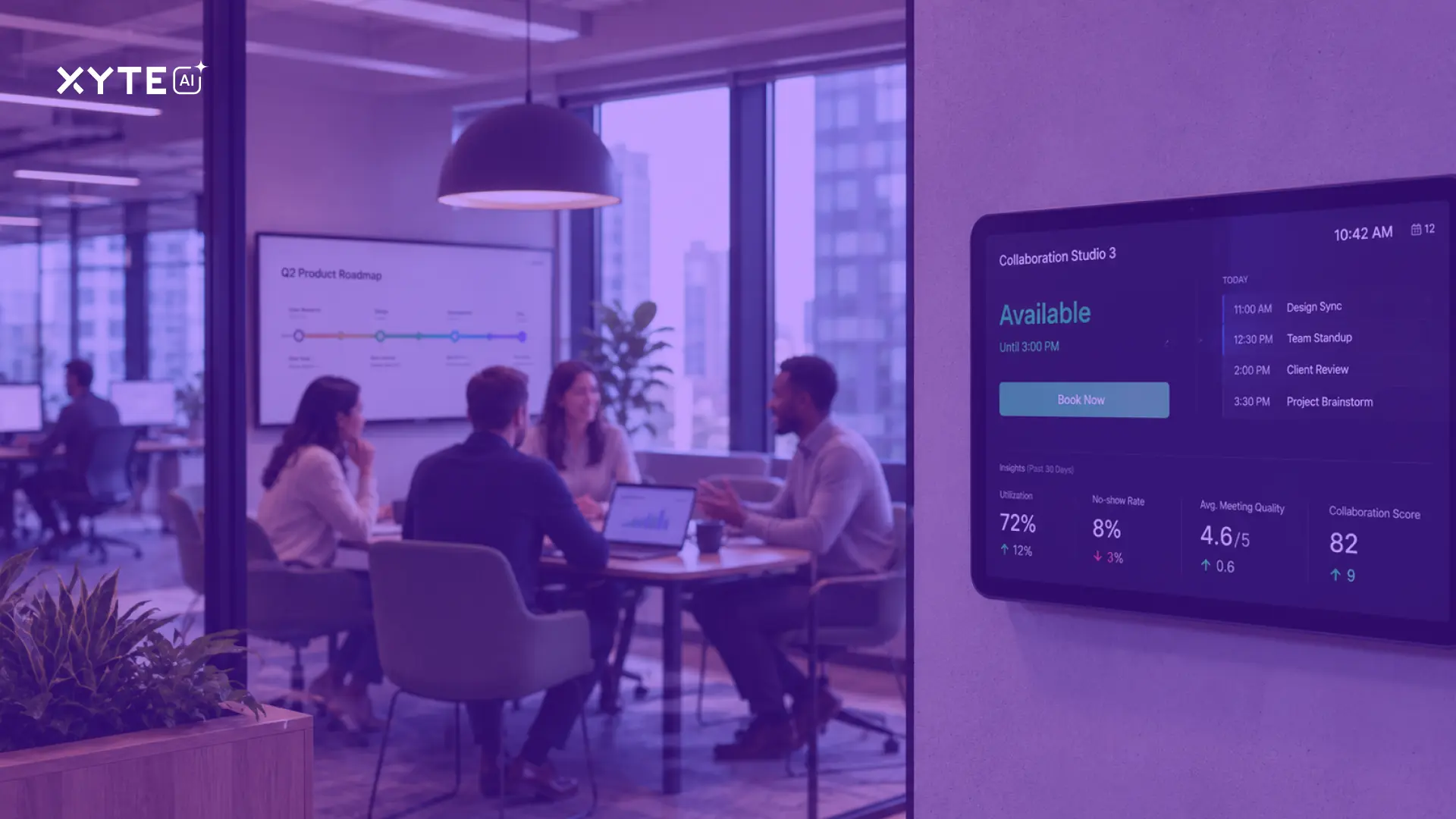
Most of the data needed to measure and alleviate digital friction is already being generated by the AV infrastructure that IT manages. Room sensors pick up occupancy, air quality, and temperature. Collaboration endpoints log call performance, join times, packet loss, and firmware status. Frameworks like Cisco's workplace analytics model show how to organize this data, mapping device telemetry to specific KPIs like a DEX Score, Active Participant Rate, Digital Friction Index, and Room Performance Score.
In this way, device-level telemetry can be translated into a real-time measure of how the room impacts the experience of the people in it. This delivers tangible benefits: Forrester research found that organizations with mature digital experience programs see 64% reductions in service desk ticket volumes. Clearly, IT can influence experience quality at the room level in ways that other departments simply can't - and the data suggests that doing so makes a real difference.
Metrics That Cross Departmental Lines
IT's ability to influence room-level and overall experience and engagement also raises a bigger question: if AV devices are already generating this data, why are Facilities, HR, and Finance still trying to get it through much more expensive and less reliable means like surveys, manual audits, or third-party tools? The data that AV infrastructure generates can deliver immediate value for each of those teams:
- Facilities - Room utilization and occupancy data shows in real-time how spaces are actually being used, impacting space planning and lease decisions.
- HR - Environmental readings like air quality and temperature are invaluable inputs for wellbeing programs and employee experience initiatives.
- Finance - Energy consumption and sustainability data from connected devices support ESG reporting and cost optimization.
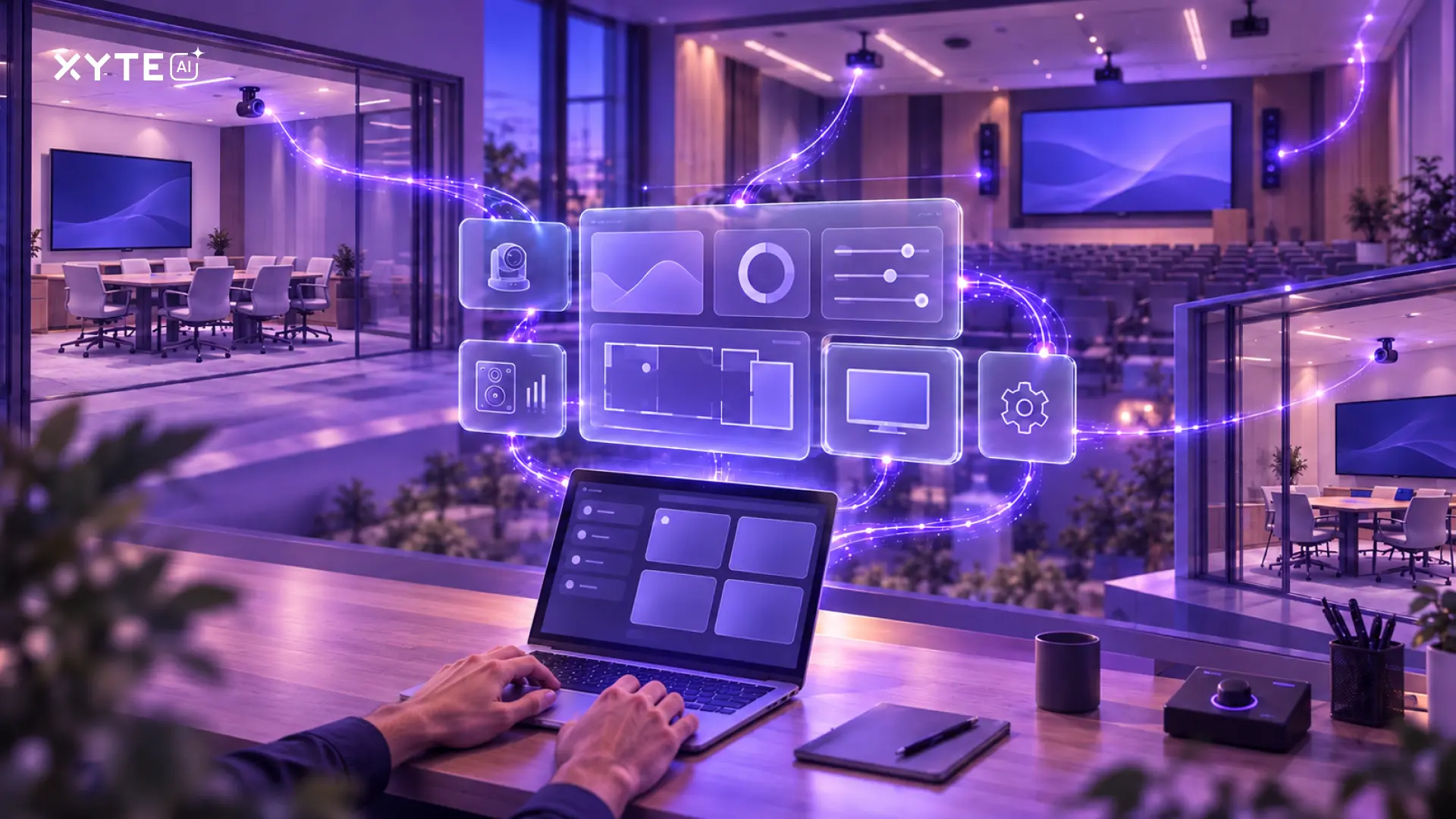
The problem is that in most organizations, this data is scattered across vendor-specific portals. One portal tracks device health, another handles firmware, a third reports on room utilization – and each has its own alerting logic, its own data format, and its own definition of what "healthy" means. Without a normalization layer, no one has a unified view and nobody can stitch the data together across sites or device types in a way that makes it usable outside of IT. This is where unified AV operations platforms like Xyte’s come in. These platforms close that gap by consolidating device data across vendors and locations into a single operational view - one that IT manages but that the rest of the organization can actually draw from when making decisions about space, experience, and investment.
IT's Seat at the Table
The workplace engagement challenge isn't going to be solved by another survey or another office redesign. In the hybrid workplace, engagement lives inside the meeting room - and those rooms run on infrastructure that IT owns. The question for IT leadership isn't whether engagement falls within their scope. It already does. The question is how they're going to surface the intelligence their infrastructure already generates and claim the seat at the table that comes with it.
Xyte's unified AV operations platform gives IT teams a single operational view across vendors, sites, and device types - and makes that data accessible to HR, Facilities, and Finance in a form they can act on.
If you're ready to turn your AV infrastructure into an enterprise intelligence asset, schedule a demo and see what your devices already know.