Large organizations are investing heavily in workplace engagement, from redesigned offices and upgraded collaboration technology to hybrid work policies. Yet many are still struggling to translate those efforts into measurable gains in productivity and profitability.
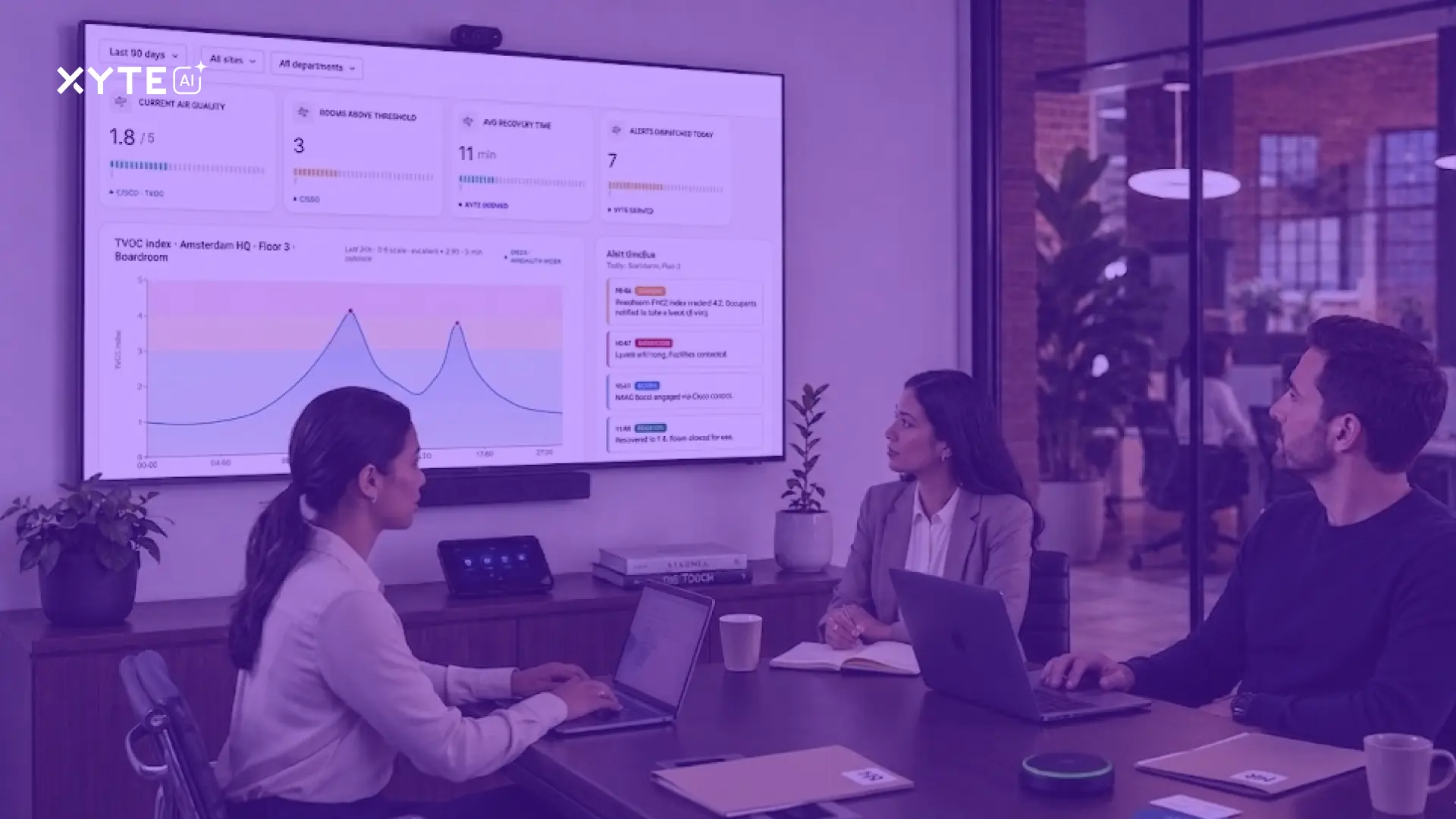
One explanation may be hiding in the meeting room, a central hub of the hybrid workplace. The devices deployed in these spaces already capture data tied directly to employee experience and engagement, including air quality, occupancy, room utilization, energy consumption, and device uptime. But in most organizations, that data is not yet being used to shape workplace engagement strategy.
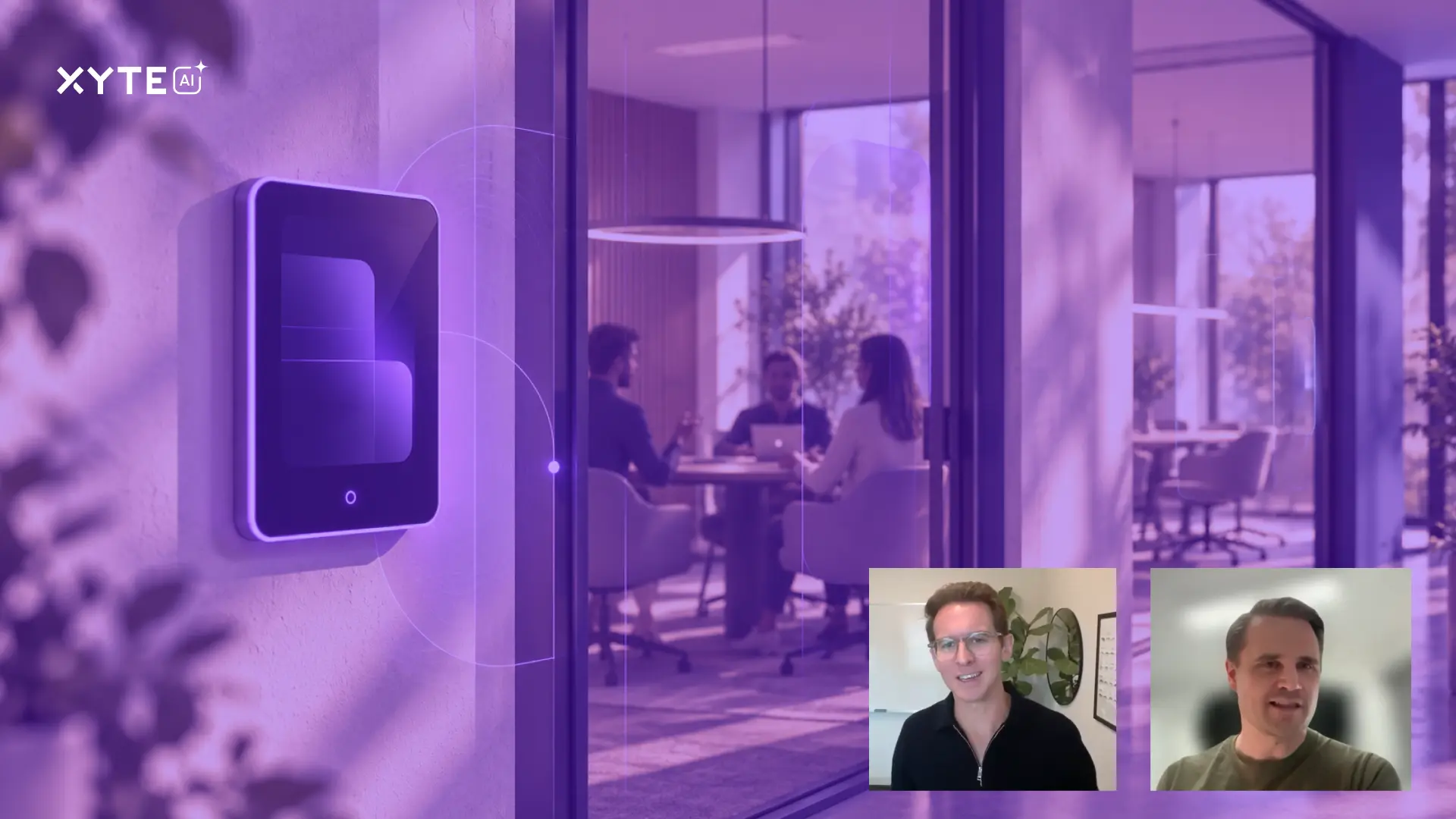
That disconnect was the focus of a May 6 live fireside chat, Data-Driven Wellbeing: How Smart Workspaces Drive Employee Engagement and Performance, hosted by Andrew Gross, Xyte’s SVP of Sales, with Chris Bottger, who leads hybrid workplace experience strategy and go-to-market for Cisco, and Rob Learmouth, VP of Global Operations at GPA. In this blog, I’ll recap the key themes from their conversation, the live polling data that reinforced them, and what it all means for how enterprises approach their hybrid workspaces.
The Engagement Gap by the Numbers
Only 21% of employees globally are engaged at work - a number that cost the global economy an estimated $438 billion in lost productivity in 2024 alone. High engagement drives measurably higher productivity and profitability, and enterprises know it. As Chris put it: "The majority of organizations do have engagement initiatives. They're just struggling because they're recognizing that only a small portion of their organization is what they would term fully engaged."
Our live polling told the same story. When we asked the audience where their organization stands on measuring workplace engagement and linking it to productivity, 53% said they're just beginning to explore workplace measurement and another 20% said they don't measure it at all. Only 20% reported actively tying engagement data to productivity outcomes. That means nearly three-quarters of attendees are either starting from scratch or not tracking engagement in any structured way.
Engagement is driven by many factors - management, culture, career development, recognition. The primary tool most organizations use to measure it remains surveys. But surveys have inherent limitations. As Chris noted, "...they're not measuring actual behavior, they're measuring survey." A survey captures how people say they feel at a given moment. It doesn't capture what's objectively happening in key workplace physical spaces - like the meeting rooms where hybrid collaboration takes place. In these spaces, air quality, occupancy, and device reliability can all shape the daily experience that feeds into engagement. Many organizations are already capturing this data. The question is what happens to it next.
The Data Exists but Nobody Owns It
When we polled our audience on how their organizations manage the meeting room and device data that shapes engagement, 40% said they don't have enough visibility yet, 27% said they have data they can't turn into action, and 20% said they're collecting data with no clear owner. The answers pointed to the same underlying issue from different angles: limited visibility, data without action, unclear ownership, and in some cases, separate IT, facilities, and HR silos.
Rob sees this play out regularly across GPA's global enterprise clients. The three departments with a stake in meeting room data - IT, facilities, and HR - each define success differently. IT wants system uptime and device performance, facilities wants space utilization and energy efficiency, and HR wants employee experience and wellbeing metrics. Each department collects its own data for its own purposes. As Rob explained, "Trying to get three people in one room to talk about a managed service - it's very difficult to do. Unless you have executive sponsorship from within that business."
Rob pointed out that most enterprise leaders already have the data they need. The problem is, they’re focusing on the high-level numbers and not delving deeper, even though they can. "Leaders have focused on the same platform, same technology, same room designs, and they have data that tells them how many people are back in the office that week, what's the utilization like in the rooms, but they're not getting into the granular detail of the data." Broad occupancy numbers tell you a room was used. But these numbers don't tell you whether air quality degraded mid-meeting, whether the room was overbooked, or whether device failure wasted the first 15 minutes of a meeting.
From Data to Action
Chris agreed with Rob, explaining that Cisco devices already capture granular detail in real time - people count, air quality, temperature, energy usage. That data can - for example - drive automated responses at the room level. When a device counts zero occupants, that signal can trigger a building or room system to shut off lights instead of waiting for a motion-sensor delay. When CO2 levels rise because a room is over capacity, it can signal the building system to adjust airflow. When energy consumption spikes across a floor of rooms, facilities teams can pinpoint exactly where and why.
The capability is there. Yet our polling showed the execution is not. When we asked how organizations manage their meeting room devices, 38% of respondents said they rely on end users to report problems and 31% said their monitoring is fragmented across vendors. That means nearly 70% of attendees have no unified, proactive way to act on the data their devices already produce.
Bringing It All Together
Our audience polling confirmed what Chris, Rob, and Andrew kept coming back to throughout the conversation - and what we’ve been seeing again and again in the market. The data that has the potential to dramatically enhance employee engagement in hybrid workspaces exists. It’s waiting in silos to be leveraged and waiting for clear ownership - which is why it’s not currently reaching the teams that could act on it. To close that gap, three things need to come together: hardware that captures room-level data, a managed services partner that knows how to operationalize it, and a platform that brings it all into a single view.
For enterprise IT, AV, facilities, and workplace teams, the next step is practical: identify which room-level signals you already collect, decide who owns them, and connect those signals in one operational view. Once data is visible across teams, it can support better room experiences, faster issue resolution, lower energy waste, and clearer workplace planning.
Watch the full webinar recording to hear Chris, Rob, and Andrew dig into the data, the live polling results, and what it all means for the way enterprises think about their hybrid workspaces.