Inside Xyte with Omer Brookstein and Andrew Gross
Enterprise AV has become mission critical. Meeting rooms, classrooms, control rooms, and collaboration spaces now power daily business operations. Yet the way AV is managed hasn’t kept up.
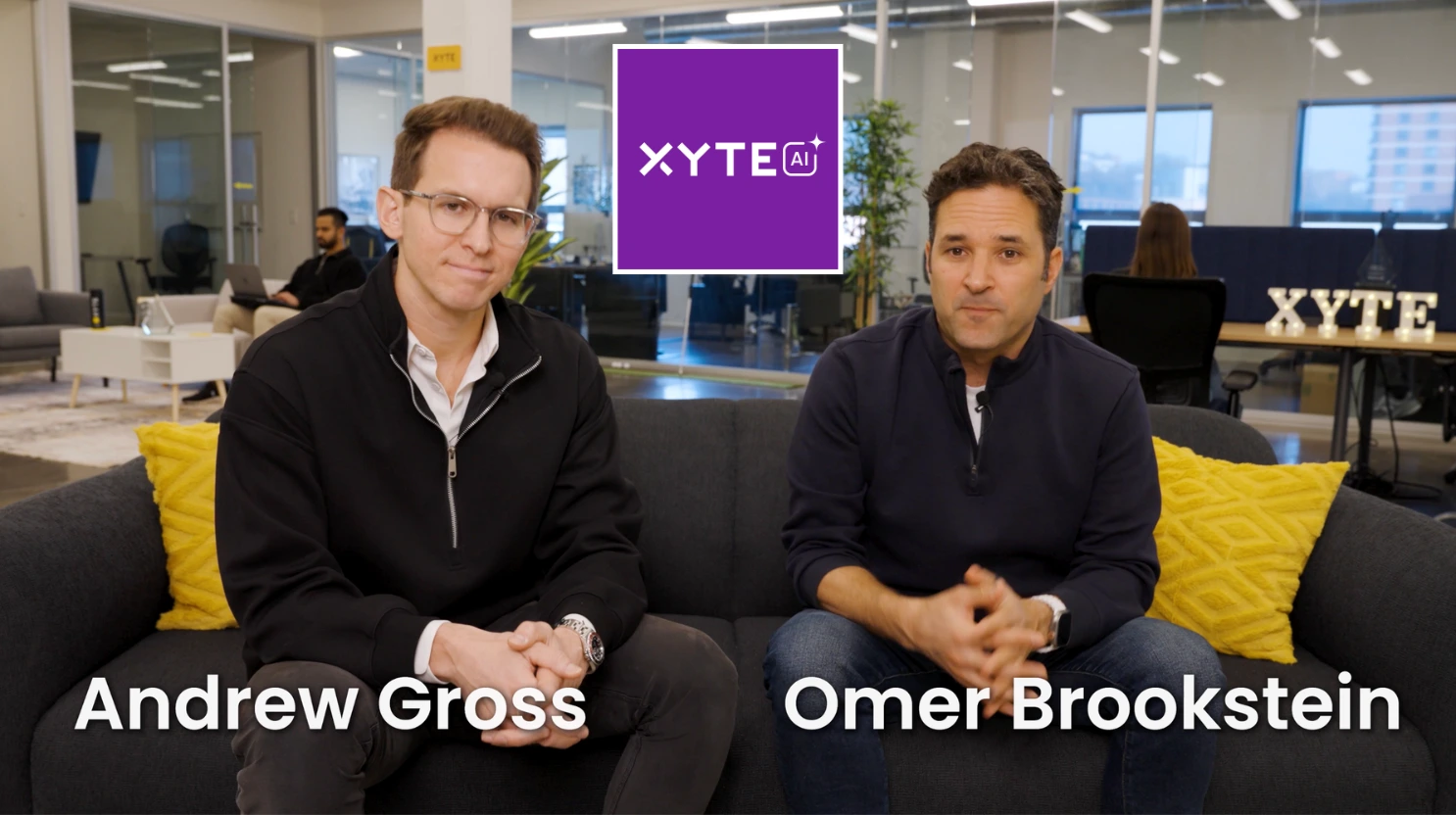
In this conversation, Omer Brookstein, CEO and co-founder of Xyte, and Andrew Gross, SVP of Sales, explain how AI is moving beyond dashboards and chatbots and into real-world AV operations.
They break down what it actually takes to make AI useful in physical environments and why AV teams need an AI teammate embedded directly into their operational workflows.
Watch: AI Teammate in Real-World AV Operations
Why AI in AV Has Been Missing the Mark
Most AI today lives in software. It works on documents, tickets, emails, and databases because that’s where data has been easiest to access.
AV is different.
AV environments are physical. They’re made up of rooms, devices, networks, usage patterns, and real-time events. Without that context, AI can’t do much more than summarize alerts.
As Omer explains in the discussion, the real opportunity for AI is not just understanding information, but understanding systems. That’s where AI starts to help teams anticipate issues, guide resolution, and reduce operational noise.
AI Needs Context to Be Useful
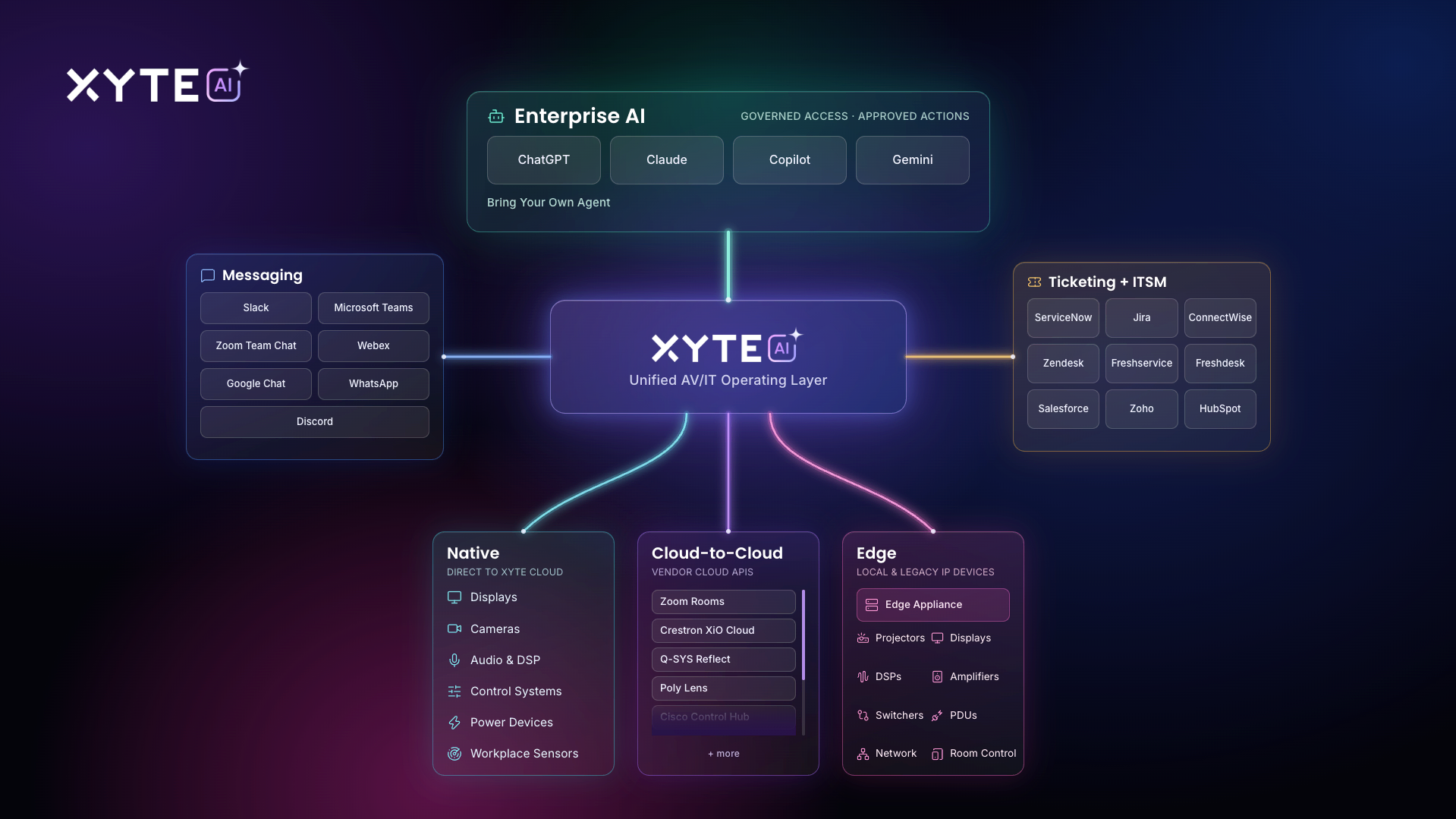
AI doesn’t become powerful by being added as a chatbot on top of an existing product. It becomes powerful when it’s built on data and context.
In the video, Omer and Andrew walk through what that context looks like in practice:
- Devices, rooms, and spaces
- Usage and performance history
- Incidents and tickets
- Workflows and outcomes
When AI understands how all of these pieces connect, it can move from basic monitoring to intelligent assistance and, over time, to more autonomous operations.
From Reactive Monitoring to Intelligent Operations
Andrew brings the conversation down to the day-to-day reality AV and IT teams face:
- More rooms and systems to support
- Higher expectations for uptime
- No increase in headcount
AI in AV doesn’t win by sounding impressive. It wins when it’s embedded directly into operations and helps teams get answers instead of more alerts.
With Xyte’s AI Teammate, teams can start the day with an operational briefing, not a wall of notifications. They can understand what changed, what matters, and what to do next, across rooms, devices, and customers.
Built for What Teams Need Today
A key point in the conversation is that this isn’t a future promise.
The AI capabilities discussed in the video are already available in Xyte today, running in production environments. Teams are using them to reduce noise, shorten resolution times, and keep systems running reliably without adding complexity.
As Omer notes, this is only the beginning. The foundation of data, context, and workflows makes it possible to keep expanding what AI can do inside AV operations.
See Xyte AI in Action
If you’re responsible for AV or IT operations, or if you deliver managed AV services, this conversation offers a practical look at where the industry is headed and what’s already possible today.
Watch the full discussion above to see how AI Teammate fits into real AV environments and how Xyte is helping teams move beyond reactive monitoring.
AV runs on Xyte AI.